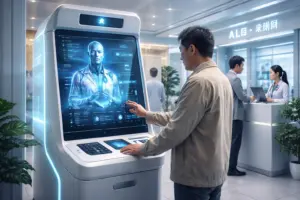
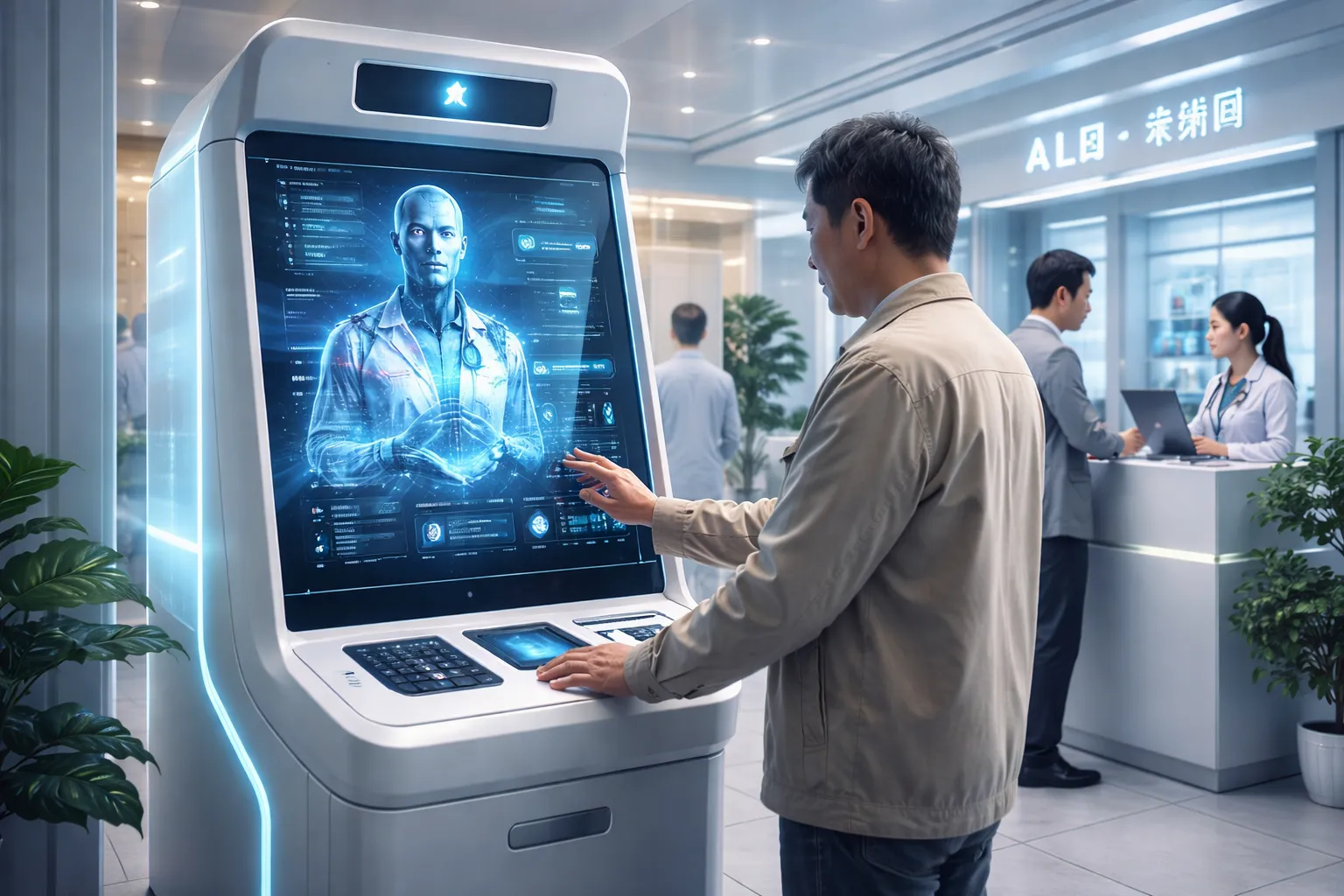
China Deploys 2,200 AI Medical Kiosks — A Glimpse of Healthcare as Infrastructure

China has quietly taken a major step toward AI-powered healthcare at scale. More than 2,200 AI medical kiosks have been installed across the country, capable of delivering preliminary diagnoses in under four minutes by comparing patient symptoms against a database of over 300 million clinical cases. Reported accuracy rates approach 95% — a figure that has sparked global attention, debate, and skepticism in equal measure.
But this development is less about headline-grabbing accuracy claims and more about something deeper: the transformation of AI from experimental software into healthcare infrastructure.
What These AI Medical Kiosks Actually Do
The kiosks are not autonomous doctors, and they are not positioned as replacements for physicians. Instead, they function as AI-powered triage and intake systems. Patients enter symptoms, vital signs, and basic health information. The system then analyzes that data against hundreds of millions of historical cases to produce a preliminary assessment and guidance on next steps.
In practice, this means identifying likely conditions, flagging urgency levels, and directing patients toward appropriate care pathways. Final diagnosis, treatment decisions, and accountability still rest with licensed medical professionals. The kiosks compress what would normally take long waiting times into a matter of minutes.
This distinction matters. The system’s value lies in scale and speed, not authority. It is a front-line filter designed to reduce congestion, not eliminate human judgment.
Why China Can Deploy AI Healthcare at This Scale
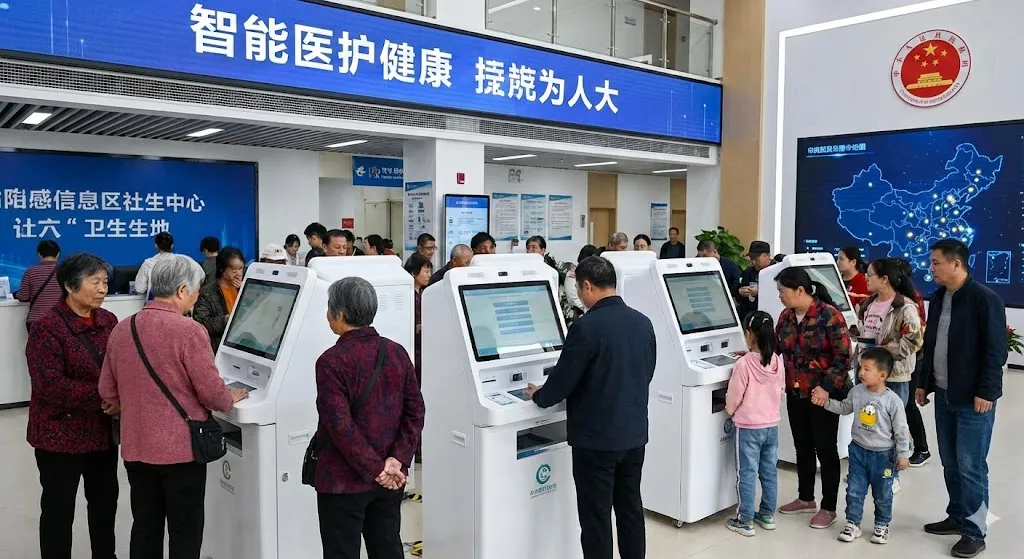
Residents utilize AI-powered medical kiosks in a busy healthcare center, illustrating how centralized planning allows China to deploy intake automation at a national scale. (AI-Generated)
China’s ability to roll out thousands of AI medical kiosks is not accidental. It reflects structural advantages that are difficult to replicate elsewhere. Centralized healthcare planning, large unified datasets, and fewer regulatory fragmentation points allow faster experimentation and deployment.
The pressure is also real. An aging population, uneven access to healthcare in rural regions, and overloaded urban hospitals create strong incentives to automate intake and triage. AI becomes less of a futuristic upgrade and more of a necessity to keep systems functional.
In that context, these kiosks are not consumer gadgets — they are load-balancing tools for a national healthcare system.

Healthcare Is Becoming Layered
What’s emerging is a layered healthcare model. AI handles pattern recognition, probability matching, and repetitive intake tasks. Humans handle interpretation, ethics, edge cases, and responsibility.
This mirrors earlier transitions in medicine. Imaging tools did not eliminate radiologists. Automated lab analysis did not eliminate pathologists. Instead, they shifted where human expertise is most valuable.
AI kiosks represent the same transition — moving first-contact healthcare from scarcity-bound human availability toward always-on digital infrastructure.
Global Implications Beyond China
The implications extend far beyond China. Most developed and developing countries face the same structural problems: rising healthcare costs, clinician shortages, and growing patient demand. AI-assisted triage systems are likely to become unavoidable.
What will differ is governance. Western systems will move slower, with heavier emphasis on transparency, liability, and patient consent. But the direction is similar: AI will increasingly serve as the first interface between people and healthcare systems.
The debate, then, is not whether AI belongs in healthcare — but how responsibility, oversight, and trust are designed into these systems from the start.
AI as Healthcare Infrastructure
China’s AI medical kiosks are not a declaration that machines can replace doctors. They are a signal that healthcare systems are being re-architected around scale. AI is moving into the same category as imaging equipment, electronic health records, and laboratory automation — foundational tools that reshape workflows without eliminating human authority.
As AI continues to mature, the most important question will not be how accurate it can become in isolation, but how responsibly it is integrated into systems that directly affect human lives.
Sources
Click Petróleo e Gás — “China installs 2,200 AI medical kiosks delivering diagnoses in 4 minutes” (2026)
Public reporting on AI-assisted healthcare deployment and clinical decision support systems
More analysis on AI infrastructure, healthcare systems, and emerging platforms:
Join VibePostAI