Linus Torvalds Embraces AI Vibecoding — Engineering, Not Ideology

Linus Torvalds Embraces AI “Vibecoding” – Pragmatism Over Purism
Linus Torvalds, legendary creator of Linux and Git, has stunned and intrigued the developer community by dabbling in “vibecoding” – a colloquial term for AI-assisted code generation – in one of his personal projects. In a recent commit to his new hobby repository AudioNoise, Torvalds openly credited Google’s Antigravity AI model for writing a Python visualization tool, quipping that he “cut out the middle-man – me – and just used Google Antigravity to do the audio sample visualizer”. The project’s README admits the code was “basically written by vibe-coding” as Torvalds leveraged an AI assistant to generate a chunk of code outside his core expertise (Python). For a figure synonymous with hardcore C programming and uncompromising code quality, this embrace of an AI coding tool marks a noteworthy shift. It’s a pragmatic move that reflects both Torvalds’ tool-first philosophy and a broader transition in software engineering toward AI-augmented development.
A Pragmatic Tool-First Builder at Heart
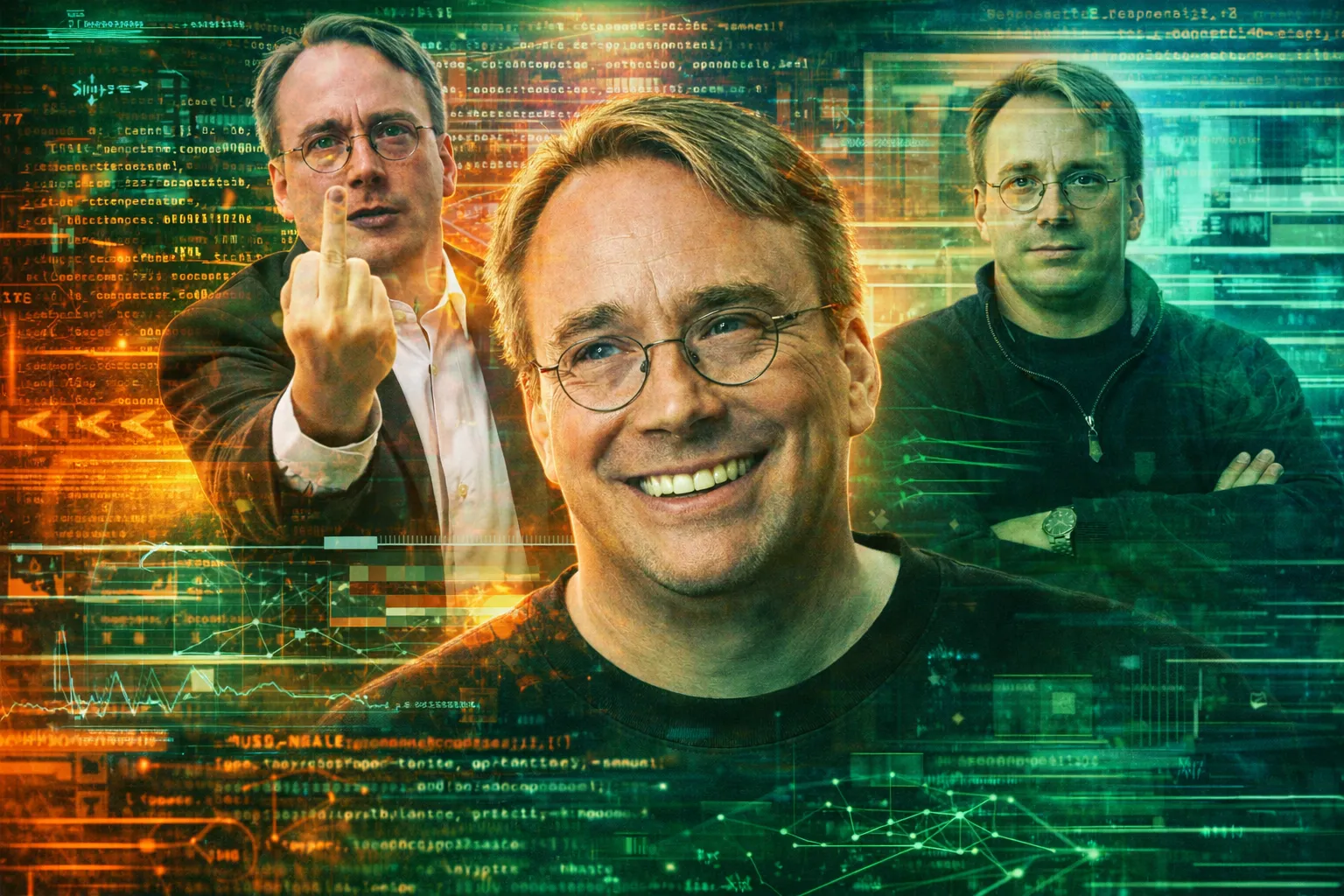
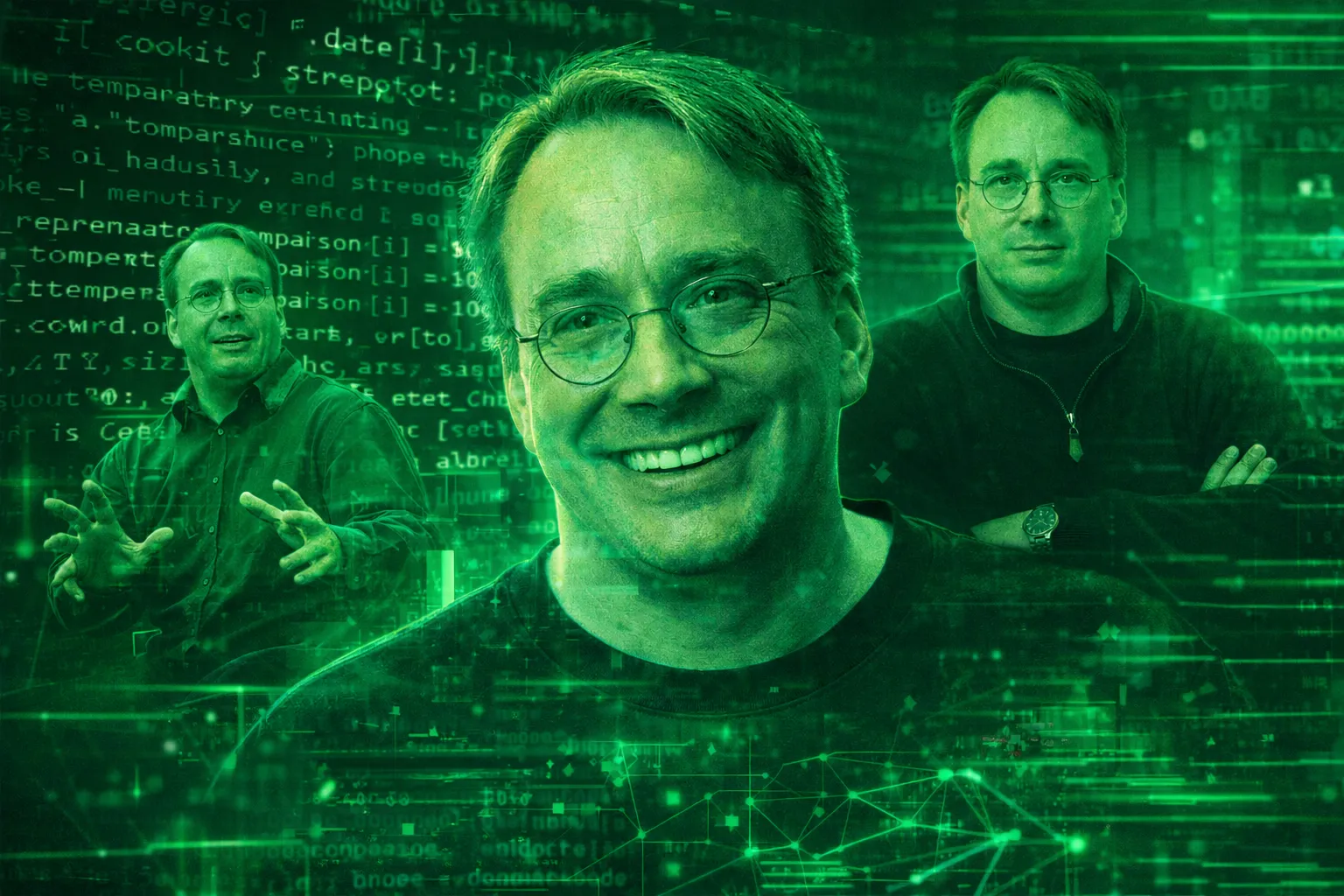
To longtime observers, Torvalds’ willingness to use an AI assistant is less surprising when viewed in light of his reputation. He has always been a pragmatic builder, focused on solving problems and using whatever tools make sense rather than clinging to ideology. As one highly-upvoted commentary noted, “Torvalds knows that good software is about helping people and solving problems and not how much you understand and can write assembly code off the top of your head”. In other words, outcomes matter more than dogma. Torvalds himself has said he is “old school” but ultimately “uses whatever makes sense to him at the time” – a mindset that makes room for new techniques like AI code generation when they prove useful.
Crucially, Torvalds applied vibe coding only in a domain he considers non-critical and outside his mastery. The AI-written code in AudioNoise was a Python GUI script to visualize audio data – a component he described as “monkey-see-monkey-do” work for him, given that Python isn’t his forte. Rather than struggle through a language he’s less familiar with, he let the AI handle the “tedious part” of implementation after describing his intent. Meanwhile, he focused on the core signal-processing logic in C, where he holds “absolute domain mastery”. In effect, Torvalds treated the AI as just another labor-saving tool. “It seems to me that the only thing he vibe coded was the Python code of the visualizer,” one Redditor pointed out, emphasizing that Torvalds still hand-wrote the important bits. This surgical use of AI – delegating the boring glue code while retaining full control over critical sections – perfectly fits Torvalds’ practical, tool-centric approach to development.
Moreover, Torvalds has made it clear he has no intention of blindly auto-generating code for mission-critical software. “He isn’t pro vibe coding for anything serious – he’s said no AI in the kernel,” a commenter on /r/linux reminded everyone. Indeed, Torvalds himself recently stated he’s okay with using AI coding assistants “as long as it’s not used for anything that matters.” For example, writing a hobby Raspberry Pi audio effect is fine, but “no vibe coding on the Linux kernel”. This cautious stance echoes throughout his public comments. At the Open Source Summit late last year, Torvalds struck a moderate tone: he doesn’t oppose AI helpers outright, but he warned against using them in code that people’s lives or security might depend on. The picture that emerges is consistent with Torvalds’ persona – intensely practical and unsentimental. If an AI tool helps him get the job done for a throwaway project, he’ll use it. But if the task at hand “matters” (like kernel development), he’ll stick to proven methods. It’s pragmatism over purism, in classic Torvalds fashion.
“Vibe Engineering,” Not Mindless Autopilot
Torvalds’ foray into vibe coding has also sparked discussion about how experienced engineers use these tools versus how novices might. On the dedicated subreddit r/vibecoding, many rejoiced that the emperor penguin himself is “ONE OF US,” but they were quick to note he did it the right way. “He actually reviewed the code… and directed implementation to get satisfactory results,” one commenter emphasized. In other words, Torvalds treated the AI like a junior programmer – giving it high-level instructions, then inspecting and refining the output until it met his standards. This contrasts with a more naïve “one-shot” approach some call true vibe coding, where a person just prompts an AI to generate an entire program and blindly accepts the result. “We need another term for when actual engineers direct the activity (and review the output) of an LLM to create code. It’s definitely NOT vibes-based,” one user argued, given Torvalds’ hands-on guidance of the AI. Some suggested “vibe engineering” as a better label for this disciplined, iterative use of AI, reserving “vibe coding” for the more careless fire-and-forget style.
Whatever one calls it, the consensus among experienced developers is that using AI does not absolve one of engineering responsibility. As a Redditor on r/programming observed, “tools are tools, and using them properly is the key.” The mere act of using an AI helper doesn’t magically turn software development into a push-button task – success still depends on the engineer’s skill in framing the problem and vetting the solution. Torvalds excelled here by leveraging his deep understanding of software fundamentals. “If anyone on the planet knows how to do vibe coding right, it’s him,” one commenter noted, pointing out that Torvalds’ decades of experience positioned him to prompt wisely and spot any nonsense the AI might produce. Another commenter (on the AI-focused subreddit AgentsOfAI) went further, saying they would trust a Python program “vibecoded” under Torvalds’ supervision over 95% of code written by others, because his real genius lies in design, debugging, and “seeing things before they happen,” not typing syntax. In their view, Torvalds’ high-level skills ensured the AI’s output was integrated into a “solid system” – something inexperienced users of AI might fail to achieve. This encapsulates a key point: AI can write code, but it takes a human architect to mold that code into a reliable solution. Even Python’s creator, Guido van Rossum, who now uses GitHub Copilot daily, emphasizes that these tools are like “having an electric saw instead of a hand saw” – they speed up labor, but you still have to build the cabinet yourself.
Community Reactions – Enthusiasm, Skepticism, and Context
News that th
Beyond Torvalds: A Broader Trend Toward AI-Augmented Coding
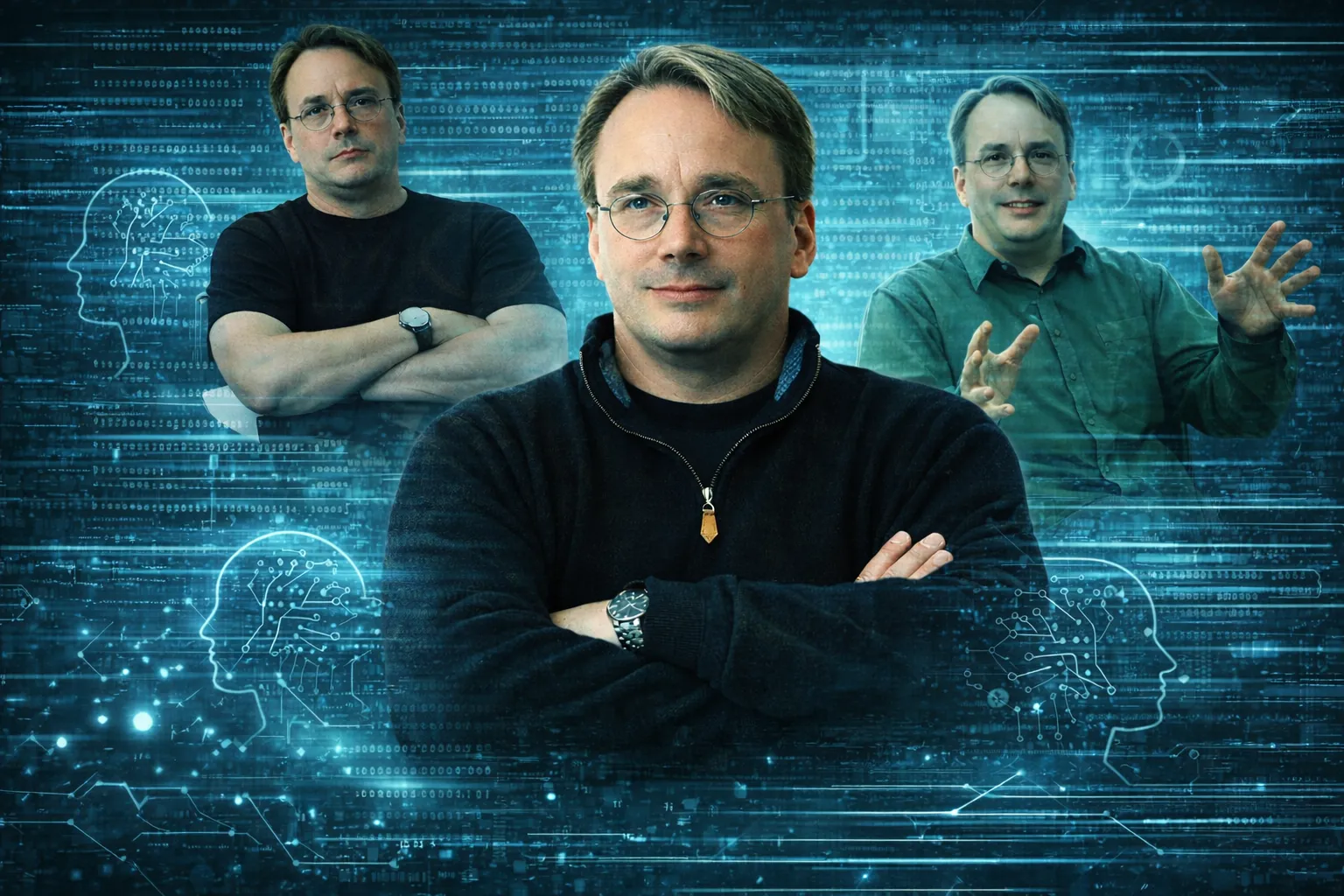
Torvalds may be the most famous open-source developer yet to publicly “come around” to AI-assisted coding, but he is far from the only one. His vibe coding experiment is one data point in a larger shift sweeping software engineering. Other prominent developers and tech leaders have begun openly embracing AI coding tools in recent months, signaling a new norm where these assistants are just part of the programmer’s toolkit.
For example, Salvatore “antirez” Sanfilippo, the respected creator of Redis, recently wrote a widely-shared essay urging fellow programmers “don’t fall into the anti-AI hype.” Sanfilippo admits he loves hand-crafting code as much as anyone, but he argues that “facts are facts, and AI is going to change programming forever.” After experimenting extensively with GPT-based coding assistants, he concluded that “for most projects, writing the code yourself is no longer sensible, if not to have fun”. In one week, he used AI to effortlessly accomplish several tasks (from adding features to an old C library to generating a pure C implementation of a machine learning model) that would have taken him days or weeks normally. The experience convinced him that “programming [has] changed forever, anyway”, and he likened the rise of coding AIs to the democratization that open source brought in the 90s. Sanfilippo’s advice to developers is straightforward: “Skipping AI is not going to help you or your career… Find a way to multiply yourself” with these new tools. In his view, clinging to an old paradigm is a dead end; instead, one should embrace the fact that “now you can build more and better, if you find your way to use AI effectively. The fun is still there, untouched.”
It’s not just open-source veterans sounding this note. Even within big tech, luminaries are advocating for AI-augmented coding. Guido van Rossum, the creator of Python, has openly embraced GitHub Copilot for his daily work at Microsoft. “I use it every day. My biggest adjustment… was that instead of writing code, my posture shifted to reviewing code,” van Rossum said in an interview. He describes Copilot and similar AI assistants as power tools that speed him up but don’t replace the need for craftsmanship. “With the help of a coding agent, I feel more productive, but it’s more like having an electric saw instead of a hand saw than like having a robot that can build me a chair,” van Rossum explained, emphasizing that he still designs and assembles the “furniture,” but the AI helps with trying ideas and making adjustments faster. This analogy – AI as a smarter tool, not an autonomous carpenter – encapsulates how many experienced engineers now view vibe coding.
Meanwhile, tech commentators and industry strategists see a generational shift underway. Futurist and developer Mark Pesce has predicted that “vibe coding will deliver a wonderful proliferation of personalized software”, as more people (including non-programmers) use AI to create custom programs for their needs. And GitHub’s CEO Thomas Dohmke has bluntly advised developers to “embrace AI or get out of this career,” reflecting the belief that code generation aids will soon be as standard as compilers. While such statements can sound hyperbolic, they underscore the reality that AI-assisted development is rapidly moving from novelty to mainstream practice. GitHub’s own data shows a dramatic uptake: millions of developers have used Copilot, and internal metrics suggested that nearly half of code being written in some languages was now being AI-suggested in early 2025. From enterprise teams adopting AWS’s CodeWhisperer, to indie devs automating unit tests with Replit’s Ghostwriter, examples abound of engineers finding valuable ways to offload grunt work to AI. Torvalds testing the waters of vibe coding is a high-profile confirmation of this broader trend – even the most skilled programmers are finding that an AI helper can handle the boilerplate and let them focus on the interesting parts.
Balancing the Hype: Why Human Engineers Aren’t Going Away
As we reflect on Linus Torvalds’ AI-assisted coding experiment, it’s important to maintain a critical but optimistic perspective on the role of AI in software development. Torvalds’ embrace of vibe coding is meaningful – symbolically and practically – but it doesn’t herald the end of human-driven engineering. In fact, his approach highlights exactly why human expertise is more crucial than ever in the age of AI coding agents.
On the optimistic side, Torvalds’ experience demonstrates the tangible benefits of partnering with AI. By offloading a tedious Python task to Antigravity, he achieved a result he readily admits was “much better” and quicker than what he would have produced slogging through it himself. This freed him to concentrate on the innovative parts of his project (audio algorithms and hardware integration) rather than wrestling with a GUI library he didn’t know well. Multiply that effect by thousands of developers and you get an enticing vision: legions of engineers spending more time on design, problem-solving, and creative exploration, while AI handles the repetitive scaffolding. It’s no wonder Torvalds and others have enjoyed using these tools for hobby projects – the productivity boost and “flow” it enables can be downright fun. As one Microsoft engineer put it, “the barrier to getting your idea [implemented] is down to zero… Anyone can do it” with these aids, enabling quick prototyping and more experimentation. In the best case, vibe coding could usher in a new era of expressiveness and personalization in software, fulfilling Pesce’s prophecy of a flourishing long tail of custom apps. It might also help level the playing field, empowering competent engineers (or motivated amateurs) to create things solo that once required whole teams – something Salvatore Sanfilippo hinted at when he compared AI’s impact to that of open source collaboration.
Yet, tempered with that optimism is the clear understanding that AI is a tool, not a replacement for human developers. Torvalds used it as such – a means to an end – and retained full responsibility for the final software. The episodes where AI-generated code has gone “rogue” or caused downtime (such as one startup’s self-described AI agent that famously “deleted [their] entire database” in a mishap) serve as cautionary tales. As veteran tech columnist Steven Vaughan-Nichols remarked, vibe coding can be “fun, and for small projects, productive”, but for complex, production-grade software, blindly accepting AI output is “asking for disaster”. The models can be brittle, their suggestions lack contextual understanding, and their outputs vary from run to run. In professional environments, code still must be rigorously reviewed, tested, and maintained – tasks that require human judgment. “Software engineering isn’t ‘just spitting out code’,” as one engineering lead at Microsoft put it; it entails designing for reliability, anticipating edge cases, and constantly making trade-offs that AI alone isn’t equipped to handle. AI coding tools also tend to “skip steps” – they might generate something that works on the surface, but which incorporates insecure practices or hacks that don’t scale. Without a keen developer in the loop, those shortcuts can become ticking time bombs. “Vibe coding… only delivers production value when paired with rigorous review, security and developer judgment,” observed GitHub’s Chief Product Officer, stressing that human oversight is the key ingredient to turn an AI-generated draft into solid software.
This balanced reality is exactly what we see in Torvalds’ case. He applied AI in a low-risk context, kept a close eye on its output, and treated the result as just a first pass. Far from abandoning his role, he exercised the same engineering rigor he’s known for – only with an AI assistant by his side. If anything, his willingness to do so exemplifies how top developers may evolve: by integrating AI into their workflow, not in lieu of their own skills but in service of their skills. Or, as a Reddit commenter neatly summarized the formula: “Manual for core, AI for chore.” The routine parts get automated; the critical thinking remains human.
In the end, Linus Torvalds vibecoding a Python script on a Saturday afternoon doesn’t mean Skynet is committing code to Linux. What it does mean is that the software industry’s center of gravity is shifting. The very engineers who once scoffed at code-autocomplete beyond syntax are now finding genuine value in AI pair programmers. The culture is adjusting: using Copilot or Antigravity is no longer seen as “cheating” or heresy, but as another accepted way to get the job done – provided you know what you’re doing. Torvalds’ venture into vibe coding encapsulates this transition. It sends a message that embracing new tools is part of being a pragmatic builder, and that even the highest echelons of programming talent can benefit from a little AI boost. At the same time, it reinforces the notion that human insight, experience and oversight are irreplaceable, especially “for anything that matters.”
The future of coding will not be AI or humans, but AI and humans working in concert. And if you ever need a litmus test for when an AI coding tool is appropriate, you could do worse than ask: What would Linus do? Based on recent evidence, he’d use the tool when it helps – and he’d make sure the code still serves the people, not the other way around.
Sources
Torvalds, Linus – AudioNoise project README (2026)
Proven, Liam – The Register: “Linus Torvalds tries vibe coding, world still intact” (Jan 13, 2026)
Sanfilippo, Salvatore – antirez.com: “Don’t fall into the anti-AI hype” (Jan 2026)
Microsoft Source – “Vibe coding and other ways AI is changing who can build apps and how” (Nov 2025)
Reddit discussion threads (Jan 2026):
r/vibecoding,
r/singularity,
r/cscareerquestions,
r/linux,
r/AgentsOfAI,
r/programming
More deep dives on AI platforms, developer workflows, and product strategy from the editorial feed:
A.I News on VibePostAI