How AI Is Changing the Way Engineers Work

When Ryan Dahl, the creator of Node.js and Deno, recently warned that “the era of humans writing code is over,” the reaction was immediate and polarized. Headlines framed it as a funeral announcement for programmers, while social media rushed to declare either total agreement or total panic. But Dahl’s argument, when read carefully, is not about the disappearance of engineers. It’s about a shift in how software is created — and who adapts fastest when tools change.
From Typing to Intent
Dahl’s comments came amid the rapid rise of AI-assisted coding systems capable of generating, refactoring, and reasoning about code at a level that would have been unthinkable even two years ago. His claim wasn’t that software no longer needs human intelligence, but that the act of manually writing every line is becoming less central to the job. In his view, engineers who continue to define their value purely by syntax and keystrokes are anchoring themselves to a shrinking part of the workflow. The industry, he argues, is moving toward intent-driven development — describing what should exist, then shaping, verifying, and integrating what machines produce.
Vibecoding as Practical Engineering
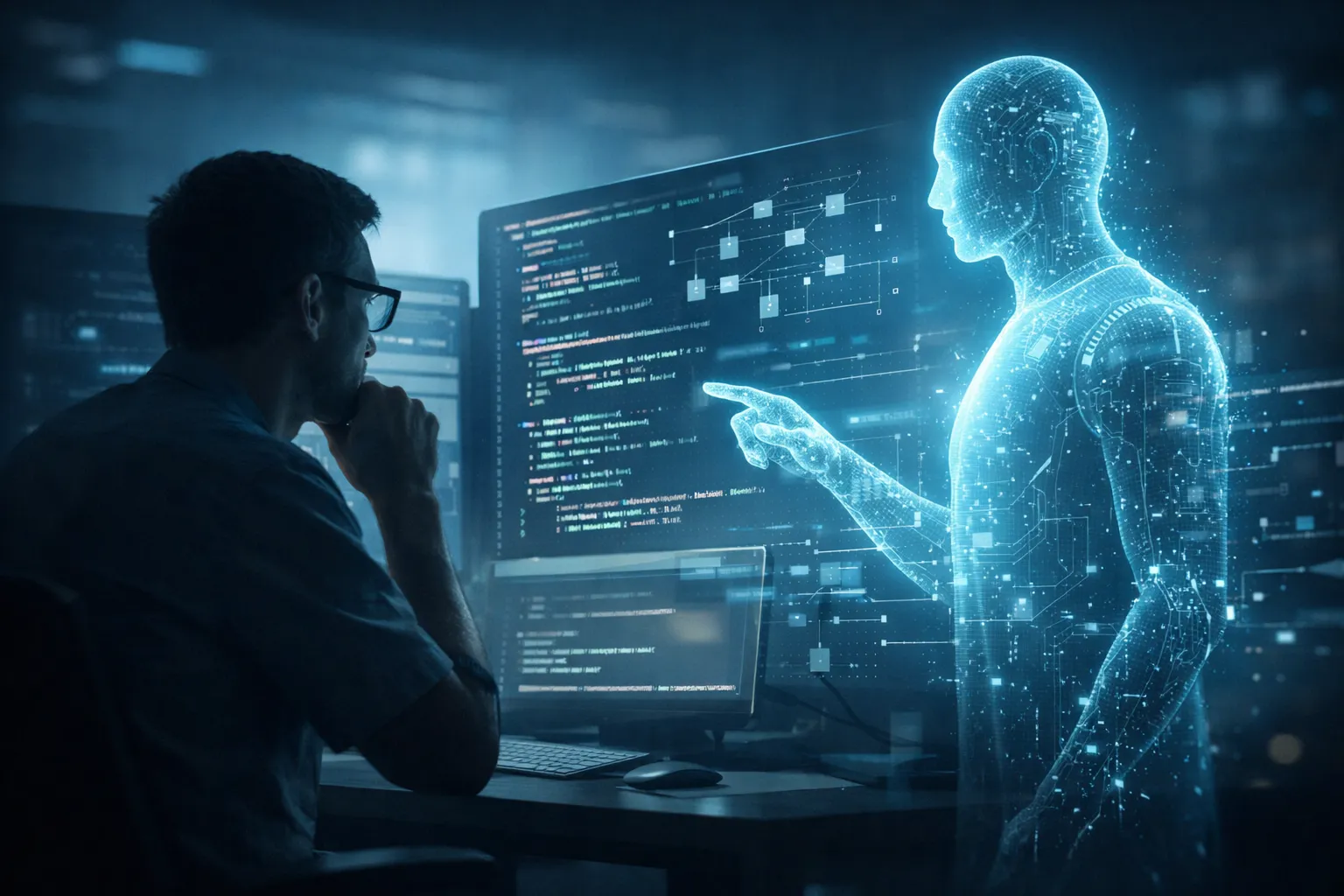
That framing aligns closely with what VibePostAI described earlier in its editorial on Linus Torvalds and AI-assisted development. As we noted, Torvalds’ recent use of AI tools was not ideological or performative — it was pragmatic. He delegated non-critical code generation to an AI system while retaining full control over architecture, correctness, and outcomes. That distinction matters. Elite engineers are not surrendering responsibility to machines; they are reallocating effort away from repetitive execution and toward judgment, design, and system thinking. That practice is increasingly referred to as vibecoding: a workflow where human intent, taste, and oversight guide AI output rather than replace them.
The New Bottleneck: Decision Quality
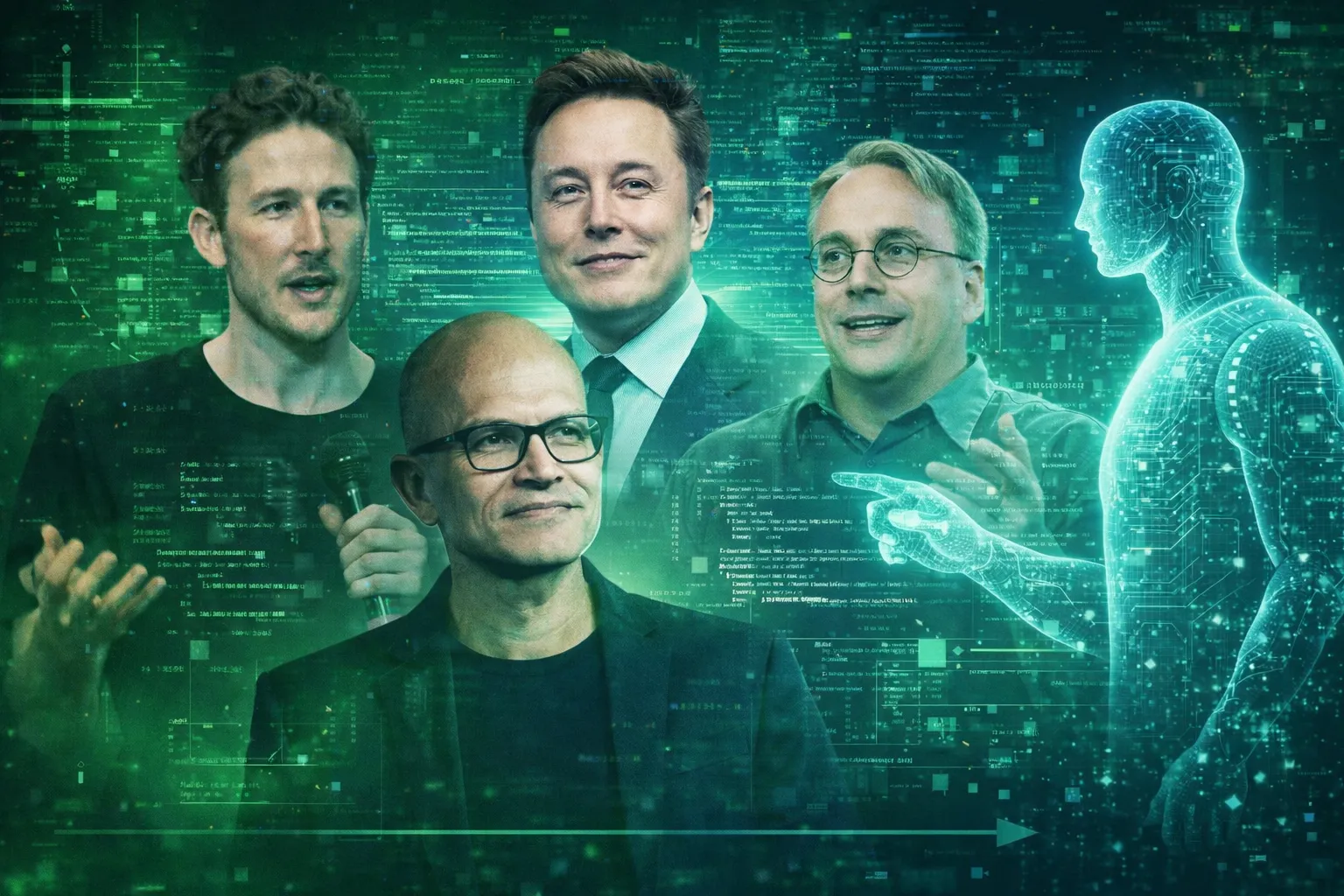
The industry’s most influential figures are echoing this pattern. Elon Musk, responding to Dahl’s comments, remarked that he “may have a job” for him soon — a tongue-in-cheek acknowledgment that the people who understand systems deeply will remain valuable, even as the mechanics of coding evolve. Musk has repeatedly stated that AI will write most code in the future, but he has also emphasized that oversight, verification, and direction remain human responsibilities. In other words, the bottleneck is no longer typing speed — it’s decision quality.
Similar views are coming from across the industry. Satya Nadella has described AI coding tools as a “force multiplier” rather than a replacement, shifting developers into roles focused on orchestration and review. Jensen Huang has argued that AI lowers the barrier to software creation, making programming more accessible while increasing demand for people who understand systems, performance, and constraints. Even Guido van Rossum has openly said that his daily workflow now involves reviewing AI-generated code more than writing it from scratch — a change he compares to moving from hand tools to power tools.
Why This Shift Favors Experienced Builders
What’s often missed in the public debate is that this shift favors experienced builders, not amateurs. Vibecoding works best when the person directing the system knows what good looks like. AI can propose implementations, but it cannot reliably determine whether those implementations fit real-world constraints, scale safely, or align with long-term architecture. That evaluative layer — the ability to say “this is wrong,” “this will break later,” or “this solves the wrong problem” — is precisely what distinguishes strong engineers from weak ones. As tools accelerate output, discernment becomes more valuable, not less.

Abstraction Always Wins
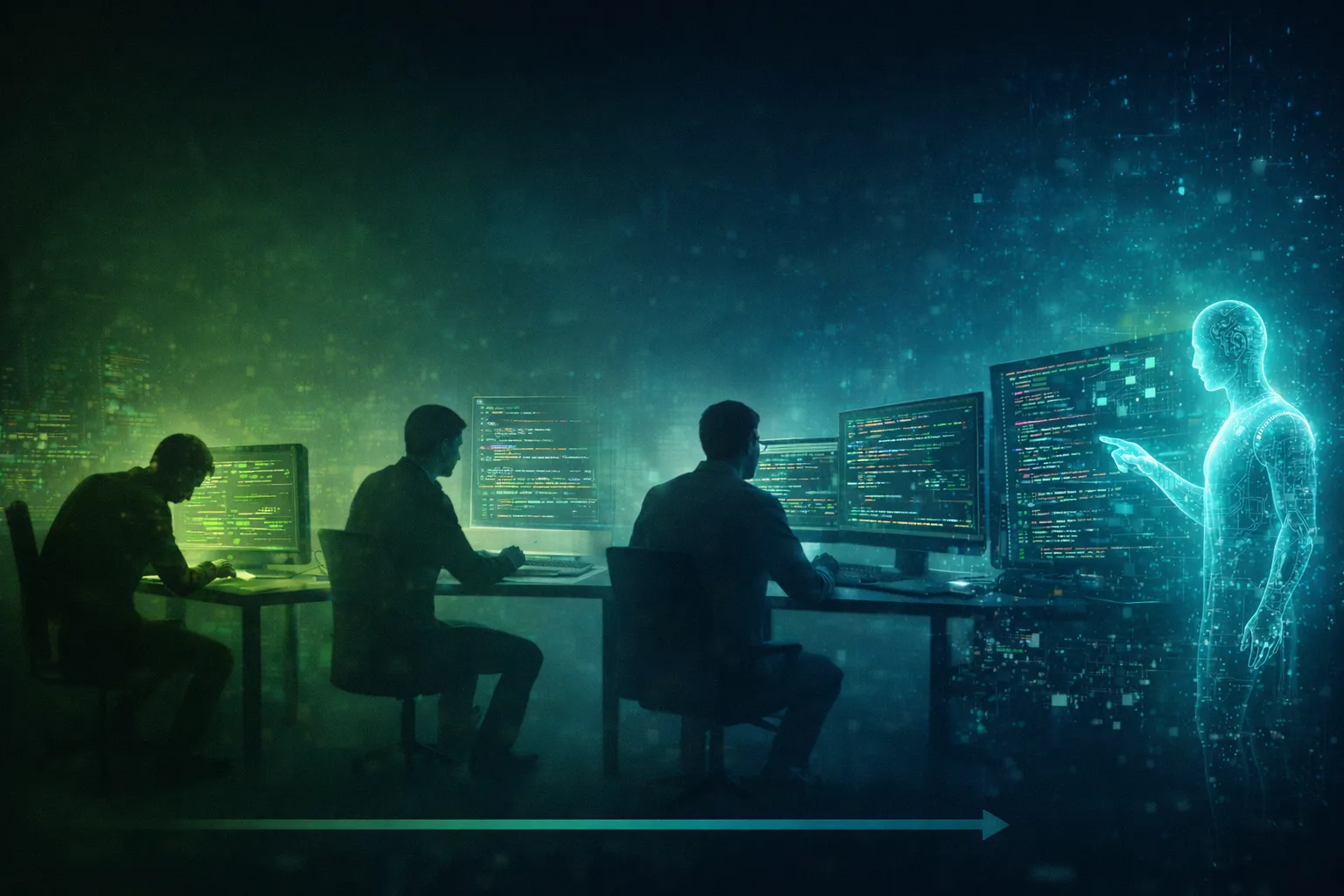
This is why resistance to AI coding often comes framed as purity arguments rather than technical ones. History shows the same pattern with compilers, higher-level languages, frameworks, and even version control. Each wave reduced manual labor while increasing abstraction, and each wave was initially criticized as “not real programming.” The engineers who thrived were the ones who adapted early and redefined their role. The ones who didn’t were eventually forced to adapt anyway — just later, and under worse conditions.
Posture, Not Obsolescence
Ryan Dahl’s warning, then, is less about obsolescence and more about posture. Engineers who cling to hand-writing every line as an identity risk becoming misaligned with how software is actually produced. Engineers who treat AI as an extension of their thinking — a collaborator that accelerates iteration while demanding stronger judgment — are positioning themselves for the next decade of building. Vibecoding is not the end of engineering. It is a shift toward engineering that values intent, clarity, and systems over ceremony.
The era of humans only writing code may be ending. The era of humans designing, directing, and validating complex systems is very much not.
Sources
VibePostAI — “Linus Torvalds Embraces AI Vibecoding — Engineering, Not Ideology”
More deep dives on AI platforms, developer workflows, and product strategy from the editorial feed:
A.I News on VibePostAI